📱| Verifiably Confusing: Status Anxiety, Conferred Legitimacy, and Verification's Pay-to-Play Pivot
I'll admit it - I coveted the blue check I never got. But that’s changed.

This is an entry in Shaped by Tools - the tech vertical of The Post-Evangelical Post. Tech is one of my lifelong hyperfixations alongside belief & social change. Subscribe to keep up with my writing.
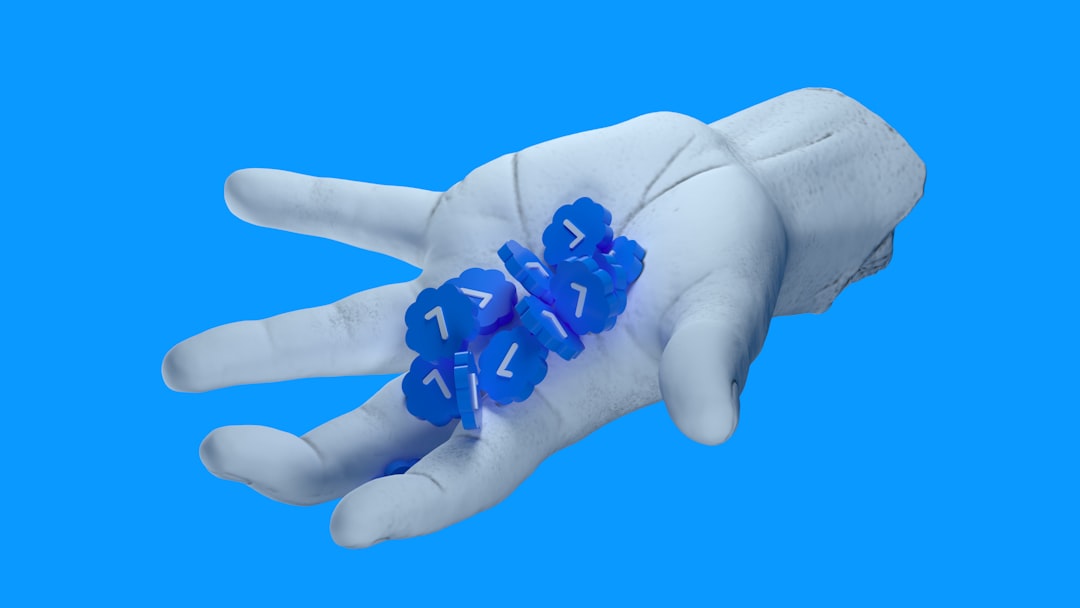
For many years, I really wanted to be verified on Twitter. I’d apply regularly (when applications were open; I was never Big Time enough to get verified during the “paused” periods), and would always be turned down.
Regardless of whatever specious requirements Twitter had at the time, I’d try to to contort to them.
Press mentions? Sure, I’ve got them at VICE, The New Republic, the NYT, Splinter News, CBS Religion, Religion Dispatches, a Newsweek cover story, and in Australian and German media.
Bylines at already-verified publications? I had a few.
Association with a hashtag movement? Yep.1
Each time I’d be declined because I didn’t quite fit - my publication dates were too far apart, etc - and eventually I’d be barred from even being able to apply for the category I best fit into as “activists, organizers, and other influential individuals” because I “didn’t meet minimum requirements.” (Twitter’s process never said what those requirements were - engagement, follower count, off-network things. Nothing - the form just wouldn’t advance.)
What I never had were either of the two things that often lead to easy verification on Twitter—journalist credentials from a media company, or pre-existing fame.
It didn’t matter that I had helped jumpstart a hashtag on Twitter itself with incredible staying power, that would migrate to other social networks (#exvangelical at present has over 1.4 billion views on TikTok). It didn’t matter that I had interviewed high-profile people from entertainment and academia on my shows (Pete Holmes, Reza Aslan, Jeff Sharlet, David Bazan, Jennifer Knapp, Diana Butler Bass, Kristin Kobes Du Mez, Anthea Butler, and many others). I just didn’t have the numbers or something.
Now, thanks to Elon’s epic mishandling and misunderstanding of Twitter, the blue checkmark has from from coveted to cringe.
But of all the takes I’ve read about (de-)verification so far, I haven’t seen any that reflect something like my experience - and the new verification products/statuses from Twitter, Instagram, and Substack confer something different than what those old blue checks did on Twitter.
Verification Before Elon
Before Elon reduced Twitter’s verification into a pay-to-play system, verification conferred two things:
- the legitimacy of accounts that purported to belong to notable people or organizations, and
- the vaguer legitimacy of conferring the status of “notable” onto an account to begin with.
The first service, of verifying that you are who you say you are, is a backstop against disinformation. It is a necessary function in a digital media environment where information can propagate at inhuman speeds. It made sense that people who made media for a living at a media organization had an easy on-ramp to verification in this context.
The second service, of conferring “notable” status, is a value judgment. Twitter’s prior management was lazy on this front. Notability provided by wealth, fame, and other forms of privilege was easily conferred to their system, and it made acquiring verification through backdoor access trivial.
It was the social-climber aspect of being deemed Notable Online™️ that made the blue check desirable for people like me.
I was, and remain, independent - I don’t make media for a larger organization. But perhaps, if I contributed enough to a platform, to enough of the public conversation, that spurred further conversations or commentary (even if they would not acknowledge existing or prior conversations), then maybe I’d “earn” this recognition.
This tiny piece of status, a little attaboy from an uncaring corporation might ostensibly mean you’d “made it” to some degree. This is more true outside the realms of journalism & celebrity, where such things were expected givens. If you could “earn” verification, then perhaps you could earn other things, like more of a following, more opportunities, more money, more acclaim—and yes, more algorithmic amplification, which meant more eyeballs.
That was the allure, anyway.
The lived reality of people with checkmarks were far more mundane. Over time, conservative factions would lambast “blue checks,” and it became another way to deride/dismiss/otherize people, just as has happened with other terms like “woke.”
Then Elon bought Twitter and made everything far more confusing.
A Verified Mess
Operating from the misguided conservative assumption that only liberals were verified, when he introduced “verification” to Twitter Blue, he weakened what a checkmark meant by failing to verify people are who they say they are. All of a sudden, a blue check was reduced to “I have $8 this month and can pose as Eli Lily and announce free insulin,” or make Mario look like he’s officially flipping the bird.
Elon also conflated the scarcity of the “notable” aspect of Twitter’s verification as something worth paying for on its face, with no other tangible benefits.
Every step Twitter has taken with regard to verification since has made the symbol more cringeworthy. They’ve introduced colors. They’ve required it for advertisers, and randomly increased the costs of API use and other features. They’ve stripped legacy checkmarks from journalists and anyone “legacy verified” and only made it available to Twitter Blue subscribers—except when Elon is paying for it himself. Even then, celebs are tweeting that they aren’t paying for it even though their Twitter profile says they are, because it’s embarrassing, and it could be legally considered false endorsement.
In a telling sign of where this is going, Twitter Blue’s settings may one day offer users the ability to hide the checkmark.
Elon’s galaxy-brained business moves simultaneously deteriorated both functions of Twitter’s prior verification program at rocket-speed—but not before introducing the idea of paid verification to social media.
The Paid Verification Shift
Shortly after Twitter added the verification badge to the Twitter Blue program, Meta would follow suit and offer a service for Instagram and Facebook called Meta Verified, which offers a badge, impersonation protection, and customer support, for $12-$15 per month. The customer support & impersonation protection may be worth the purchase for folks (like some friends of mine) who deal with impersonation. But the badge-for-bucks is just a copy of Twitter Blue.
Elsewhere, here on Substack, badges have come to mean that people pay you. The announcement of Substack Bestseller Badges was a bit of product-launch-as-trolling (if you have 100 paid subs, you get one badge color, with different badge colors the more successful you are), but with the subsequent launch of Substack Notes, the years-old muscle memory of Twitter’s verified badge once again confers that vague legitimacy, and invokes the same desire for status.
Shifting verification badges from both “this is really me” and “this account is notable for some social reason” to “this badge signifies a transaction was made with this platform” has drastically changed what the symbol means. In the case of Twitter Blue, it entirely sidesteps the literal act of verification now.
Coupled with the reckless and unpredictable actions of Elon, and his truly astounding ability to alienate his customers, backers, and anyone not impressed by his blatant desire to be the web’s baddest edgelord, it is no surprise that the status symbol has become a toxic asset that very few people want.
In Neal Stephenson’s Fall: Or Dodge in Hell, an elaborate hoax takes over the entire Internet that the town of Moab, Utah had been destroyed by a thermonuclear device. Doctored footage went viral online, the FAA restricted airspace around the area, and panic flooded the world. It was all fake. The reputational cost for the entire social web was catastrophic, and within the context of the book, the social web would be entirely supplanted by cryptographic services that could both verify identity/online activity and also provide anonymity if required—but “truthers” who would “Remember Moab” would still abound. Moab was a Rubicon-crossing moment. So was the the decline of the verified badge as both status symbol and proof of identity.
Twitter’s decline is sad for several reasons. But at least it freed us from wanting this form of validation.
Other Writing on Twitter
I wrote about Twitter’s prior function that allowed a “counterpublic sphere” to flourish.
And when Twitter entered its Musk Era:
I wrote about how Twitter didn’t survive the vibe shift:
This being listed as a potential qualification for about a month and was then removed. ↩