
📚The Comfort of Fictional Religions: Bokononism, a useful religion founded on lies
Vonnegut's hopeful humanist fatalism
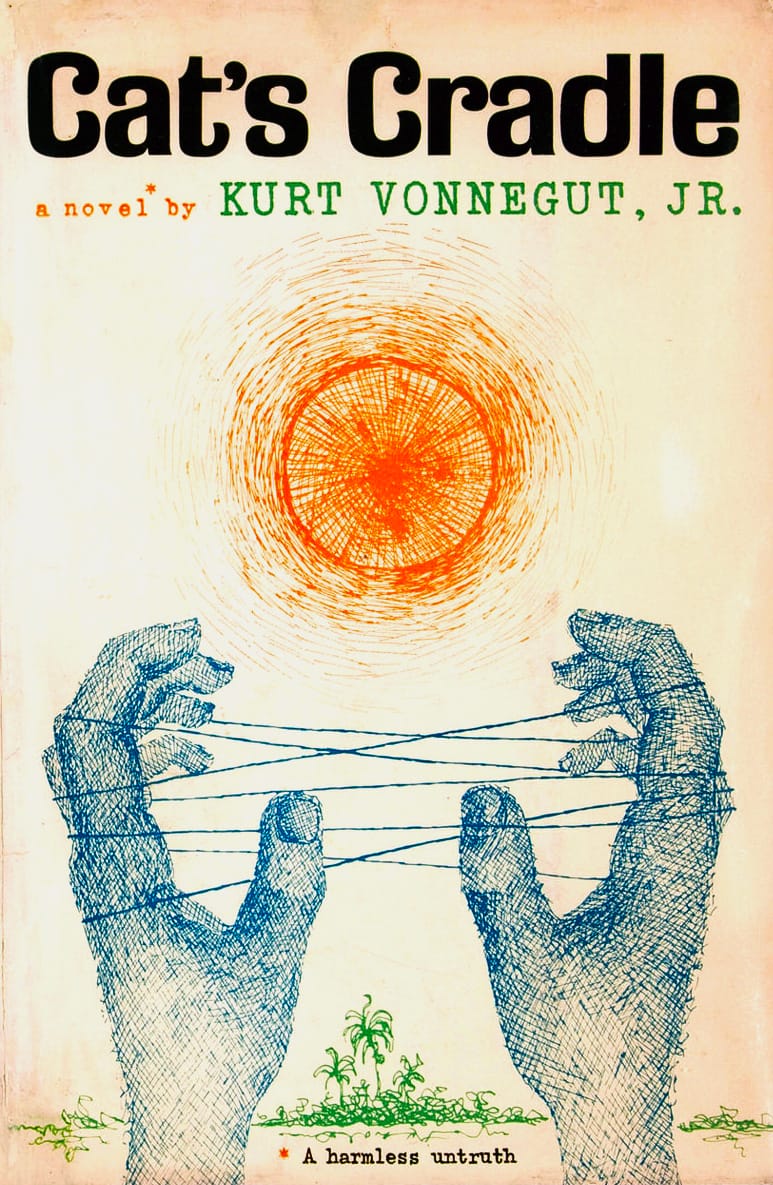
This entry in The Good Books is part of my series “The Comfort of Fictional Religions.” See prior entries here.
And come see me, Brad Onishi of SWAJ, and Tim Whitaker of The New Evangelicals in Philly on 2/11!
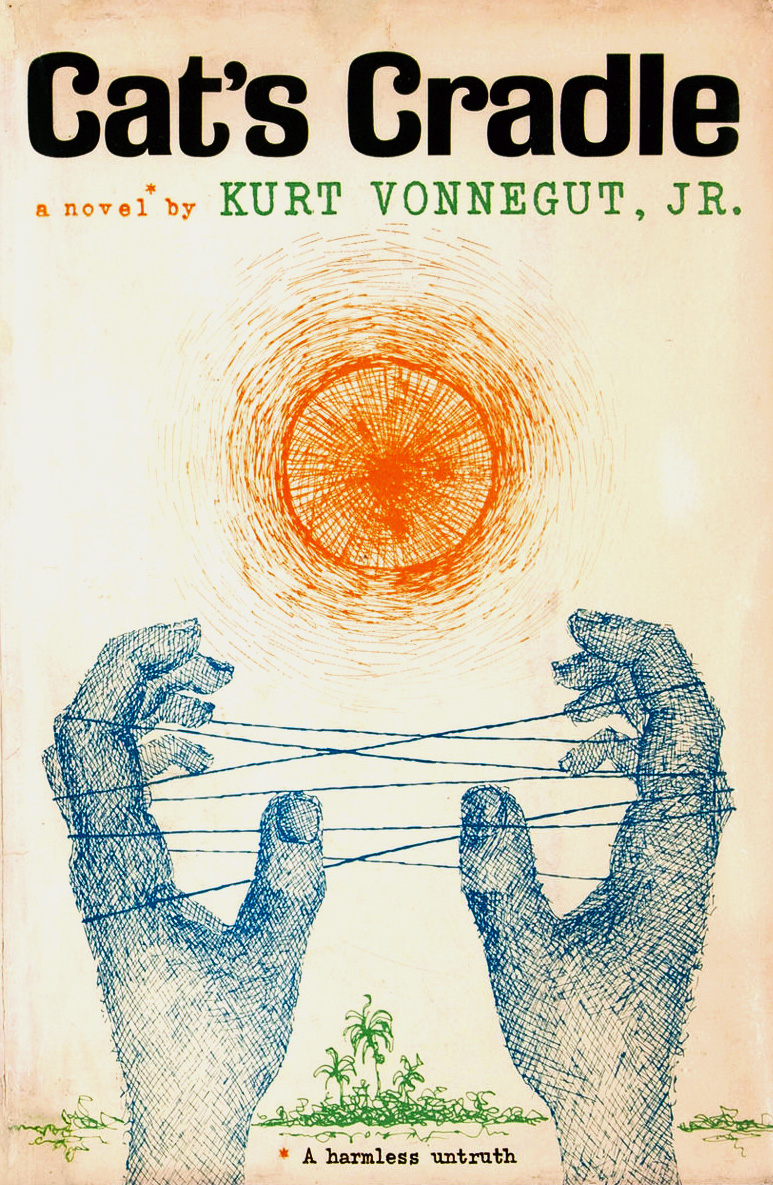
I first discovered Vonnegut’s writing while in undergrad. I attended Indiana Wesleyan, and while I graduated with a writing major, I never took any lit classes that actually assigned Vonnegut.1
I’m fairly certain that my first Vonnegut book was, predictably, Slaughterhouse Five, which I loved. There was something about his prose that was so economical, but evoked a type of emotion that other minimalist authors like Hemingway couldn’t touch. I had read A Farewell to Arms, but that pessimism was different than the fatalism I found in Vonnegut.
Many of Vonnegut’s books are about protagonists stuck in inescapable circumstances: the unstuck-in-time Billy Pilgrim, Howard Campbell, Jr. awaiting his trial for war crimes, Jonah on assignment in San Lorenzo, the entire goddam universe experiencing locked-in syndrome for 10 years in Timequake. But it’s in Cat’s Cradle where Vonnegut gives his characters a religion to cope with the circumstances they find themselves in. That religion is Bokononism.
Bokononism is a false religion. It makes no bones about that, even within the fictional text: